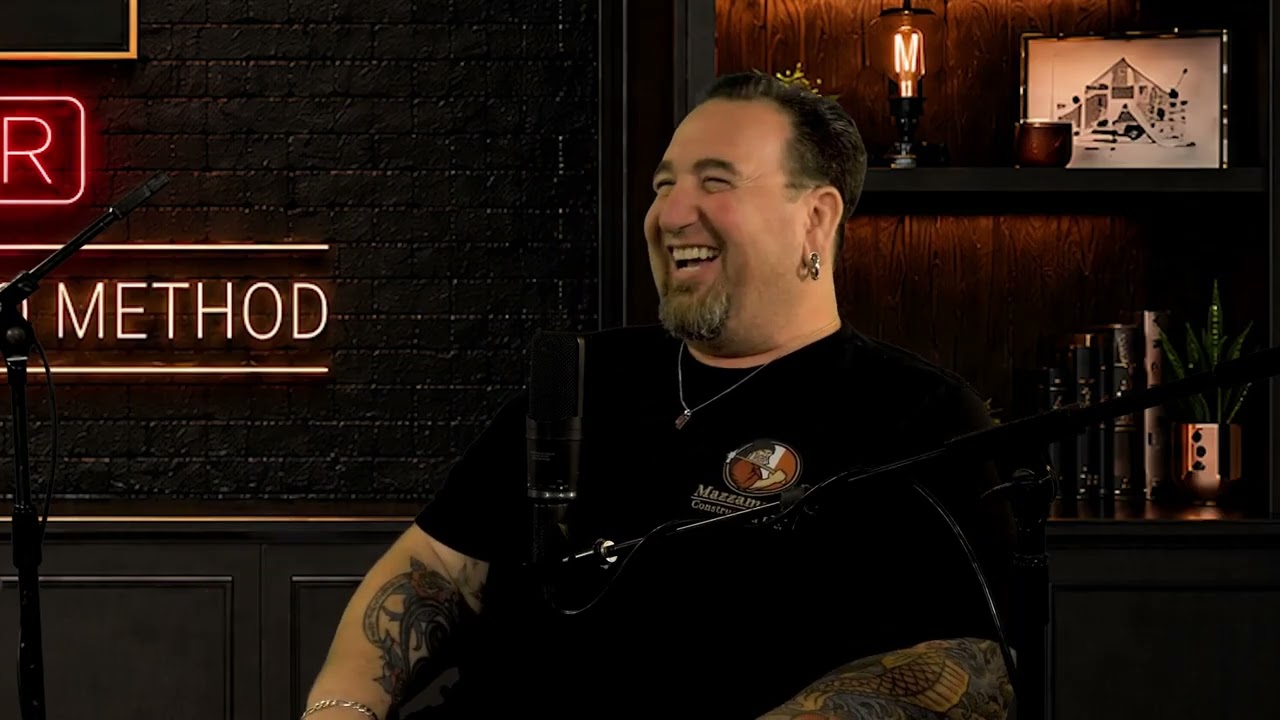
The lowest contractor bid often costs the most: one Lafayette family that took the low bid ended up roughly $300,000 over an honest price. In this episode of The Mazzamuto Method, Gino and Mario Mazzamuto and project manager Mike Spinelli of Mazzamuto Construction in Martinez, California, share what homeowners should hear before hiring anyone.
The short answer: A very low bid usually means the contractor either does not understand the job or never intends to finish it at your price. Be wary of a 50% upfront deposit, get a second opinion on any “emergency” gut job, and never accept a text-message bid for structural work.
By Gino and Mario Mazzamuto, Mazzamuto Construction. Published July 10, 2026.
Why does the lowest contractor bid usually end up costing the most?
Because a lowball number often means the contractor either doesn’t understand the job or never intends to finish it at your price. We’re currently rescuing a Lafayette project where the family took the low bid, and ended up roughly $300,000 over what an honest bid would have cost, with only a faulty foundation to show for it.
As Mario put it on the show: “That contractor came in at the low price, but they’re going to end up paying more, like double… They’re going to pay like $300,000 more than what it should have cost them in the first place. If they had gone with an honest contractor, they would have seen the project done in about a year versus what’s now going to be like four years.” [46:26]
By the time we were called in, the previous contractor was three times over the total timeline, had spent half the total project cost, and the only thing completed, the foundation, was done incorrectly and had to be redone from scratch [42:41]. The job was supposed to be move-in ready by August; that August, the foundation had just been poured and the site sat untouched for months [46:57].
Should I pay a contractor 50% upfront?
No. A large upfront deposit is one of the clearest red flags in residential construction. On the show, Gino called out exactly this pattern: homeowners in local Facebook groups asking whether a 50% deposit is normal, it isn’t, and it’s how people lose their savings before a hammer ever swings.
“You still see people going, ‘The contractor wants 50% upfront before I start.’ No, don’t do that. Or, ‘This guy said he can build an ADU for $150 a square foot.’ That’s crazy. There are all these charlatans… Facebook groups are full of them.” (Gino Mazzamuto [43:45])
The stakes are real. “An average kitchen can be like a $150,000 remodel. That’s a lot of money to people, and most people are only going to do it one time… If it goes wrong, that’s a lot of their savings gone.” [44:22] A legitimate contractor bills against progress you can see, not against promises.
How do I know if a contractor is using scare tactics on me?
Get a second opinion before agreeing to any “emergency” gut job. If someone tells you your whole floor is failing and you need a full remodel today, that urgency is often a sales tool, not a structural assessment. Gino saw this happen to a local homeowner just weeks before recording.
“The gal said, ‘Somebody came out and said my whole floor is dry rot and it’s going to fall through, and I need to gut the whole bathroom.’ I went and looked at it and said, ‘You just need to replace your floors… You’re going to go spend 50 grand on a bathroom remodel? You can spend a couple grand to replace these floors.’ And she said, ‘They scared the heck out of me.'” [45:45]
His verdict: “That’s a tactic they use sometimes.” [46:08] Ask any contractor to show you the damage, explain the fix, and price the smallest repair that solves the problem, then compare.
Can I remove a kitchen wall without a beam?
Not without an engineer confirming it isn’t load-bearing, and the consequences of guessing wrong are catastrophic. Gino told the story of a homeowner who passed on a proper $135,000-range bid for a down-to-the-studs kitchen because another “contractor” offered $35,000 via text message.
Two years later, the man called back: “I think I may need a beam put in.” Gino walked up to the front door and found the ceiling “caving in 16 inches, at least, in the center of his house”, right where the guy had removed two kitchen walls after declaring them “not load-bearing.” [51:23] The original installer? Unlicensed, unreachable, phone disconnected. [52:34]
“I’m not walking in this house, because your house is going to fall… You need a temporary wall built underneath this thing, like, yesterday.” [52:06]
And never accept a text-message bid: “That’s like $100,000 short… you need a proper bid.” [50:57]
What building materials should I ask my contractor about?
Ask what they sheathe the house with, it’s a two-second question that reveals whether they build for durability or margin. Most contractors use OSB because it costs about half as much as plywood. We never do.
“When we sheath a house, we always do it with plywood. Every time. We never use OSB. Most contractors use OSB… It’s more susceptible to rot and mildew, and it doesn’t have the structural strength that plywood does, because it’s about half the cost.” [48:36]
As Gino noted, “a normal consumer doesn’t know that difference… but when they start getting water damage and that stuff starts falling apart, it’s something they’re going to have to deal with” [49:16], usually years after the contractor is gone. One more freebie from the episode: “Don’t ever pull your own permit on your job.” [45:19] If a contractor asks you to, walk away, they’re shifting their liability onto you.
How should a good contractor keep me informed during a remodel?
You should get an update every single day, without asking. Our crews file daily logs with photos through our project platform, so clients see exactly what happened on site each day, plus the schedule, payment schedule, invoices, change orders, and every document in one place. [23:26]
“Most clients don’t know construction. They have no idea what’s actually going on,” Mike Spinelli explained. “These daily logs and pictures… make the client feel more comfortable with the process as it’s going forward.” [23:45]
Behind that is preparation: “It’s 95% prep and 5% actual paint on the wall, that’s how I view what we do in the office. The more questions we can answer before a hammer ever hits the head of a nail, the better the client experience.” [22:18]
What do a contractor’s values have to do with my project?
Everything, because values determine what happens when no one’s watching. Gino shared a story from age 14: standing on a job site at 7 p.m. while his dad hosed down the driveway, wondering why they were still there.
“I’ll never forget his answer: ‘If the customer gets a nail in their tire, that’s what they’re going to remember about this whole job.'” [33:15]
That standard shows in the numbers: “95% of the clients we’ve worked for, not only do we go back and do more work for them, they give us referrals, or they just become friends of ours.” [36:34] When you hire a contractor, you’re not buying a kitchen. You’re buying how they behave for the six months they’re in your home, and for years afterward when you call about a garbage disposal.
Frequently Asked Questions
Should I pay a contractor 50% upfront?
No. A demand for half the project cost before work begins is a major red flag. On Episode 2 of The Mazzamuto Method, Gino Mazzamuto called this out directly: “The contractor wants 50% upfront before I start? No, don’t do that.” Legitimate contractors bill against visible progress on a published payment schedule, so your money always trails the work, never leads it by half the job. [43:45]
How much does a kitchen remodel actually cost?
An average full kitchen remodel can run around $150,000 in the Bay Area, and a down-to-the-studs remodel with wall removal quoted at $35,000 is, in Gino’s words, “like $100,000 short.” Because most homeowners remodel a kitchen only once, an unrealistically low bid risks a large share of their savings. Get a detailed written bid, never a text-message number. [44:22, 50:44]
Can an ADU really be built for $150 per square foot?
No, Gino calls that claim “crazy” and the people making it “charlatans.” Quotes far below realistic California construction costs typically end in abandoned jobs, corner-cutting, or massive overruns. If an ADU price sounds too good to be true against every other bid you’ve gathered, it is. Compare multiple detailed written bids and verify the contractor’s license before signing anything. [43:57]
Should I pull my own building permit if the contractor asks me to?
Never. As Gino put it on the show: “Don’t ever pull your own permit on your job.” When you pull the permit, you legally take on the responsibilities and liability that belong to the contractor, and a contractor who asks is usually avoiding scrutiny of their license status or work quality. A properly licensed contractor pulls permits for the work they perform. [45:19]
What happens if I hire the lowest bidder?
Often, you pay double. Mazzamuto Construction took over a Lafayette project where the low-bid contractor ran three times over the timeline, spent half the total budget completing only a foundation, incorrectly, and left the family roughly $300,000 over what an honest bid would have cost. A one-year project became a four-year ordeal. The lowest number on paper is frequently the most expensive decision. [42:41, 46:26]
A contractor says my bathroom floor has dry rot and I need a full remodel. Is that true?
Get a second opinion first. Gino inspected exactly this situation: a homeowner told her floor would “fall through” and she needed a $50,000 gut remodel. His assessment? A couple thousand dollars of floor replacement solved it. “They scared the heck out of me,” she said, and as Gino noted, “that’s a tactic they use sometimes.” Real damage can be shown, explained, and priced as the smallest effective repair. [45:45]
Can I remove a wall in my kitchen without adding a beam?
Only if it’s genuinely non-load-bearing, confirmed by a professional, not a guess. Gino described a house where an unlicensed installer removed two kitchen walls, claimed they weren’t load-bearing, and disappeared. Two years later the ceiling had sagged 16 inches at the center of the house, near a roofline change, endangering the family. Structural changes require proper engineering, permits, and a licensed contractor. [50:19–52:18]
How do I know what’s happening on my remodel every day?
A well-run contractor should tell you, daily. Mazzamuto crews post daily logs with photos to a client portal (Builder Trend), so homeowners see each day’s completed work, the schedule, the payment schedule, invoices, change orders, and selections in one place. As Mike Spinelli explained, most clients don’t know construction, and daily documentation “makes the client feel more comfortable with the process as it’s going forward.” [23:26–24:11]
What’s the difference between OSB and plywood sheathing, and does it matter?
It matters years down the road. Most contractors sheathe with OSB because it costs about half as much as plywood, but it’s more susceptible to rot and mildew and lacks plywood’s structural strength. Mazzamuto Construction sheathes with plywood “every time.” Asking a bidder “what do you sheathe with, and why?” is a fast way to learn whether they build for durability or for margin. [48:36–48:57]
What should I expect from a contractor after the job is done?
An ongoing relationship, not a disconnected phone number. Gino and Mario cite that 95% of their past clients either hire them again, refer them, or become friends. One client, Tom, whose inherited Martinez condo they fully rebuilt, bathrooms, kitchen, siding, rotted deck, HOA coordination, still texts them years later for maintenance help, and they still send someone. That’s the standard to expect. [36:34, 39:09–41:07]
Key takeaways from this episode
- Treat a lowball bid as a warning sign; in one rescue job the low bid ended roughly $300,000 over an honest price.
- A 50% upfront deposit is a red flag; a legitimate contractor bills against progress you can see.
- Get a second opinion before agreeing to any “emergency” gut remodel.
- Have an engineer confirm a wall is not load-bearing before it comes out.
- Ask what the house is sheathed with, and expect a daily update during the job.
Keep reading
- How to avoid a bad contractor
- Why the cheapest contractor bid is so risky (Episode 10)
- Kitchen remodeling with Mazzamuto Construction
- What an ADU costs in Contra Costa County in 2026
- How to choose a remodeling contractor in the Bay Area
- All episodes of The Mazzamuto Method
Thinking about a remodel in Contra Costa County or along the 680 corridor? Get a real estimate.
About the show: The Mazzamuto Method is Martinez’s construction podcast. Hosted by Gino and Mario Mazzamuto of Mazzamuto Construction, ranked in the top 1% of California contractors. Serving Martinez, Walnut Creek, Danville, Alamo, Lafayette, Orinda, Moraga, Pleasant Hill, Clayton and San Ramon. Mazzamuto Construction Inc. · CSLB #1116913 · 837 Arnold Drive, Suites 210 & 220, Martinez, CA 94553 · (925) 228-7376.