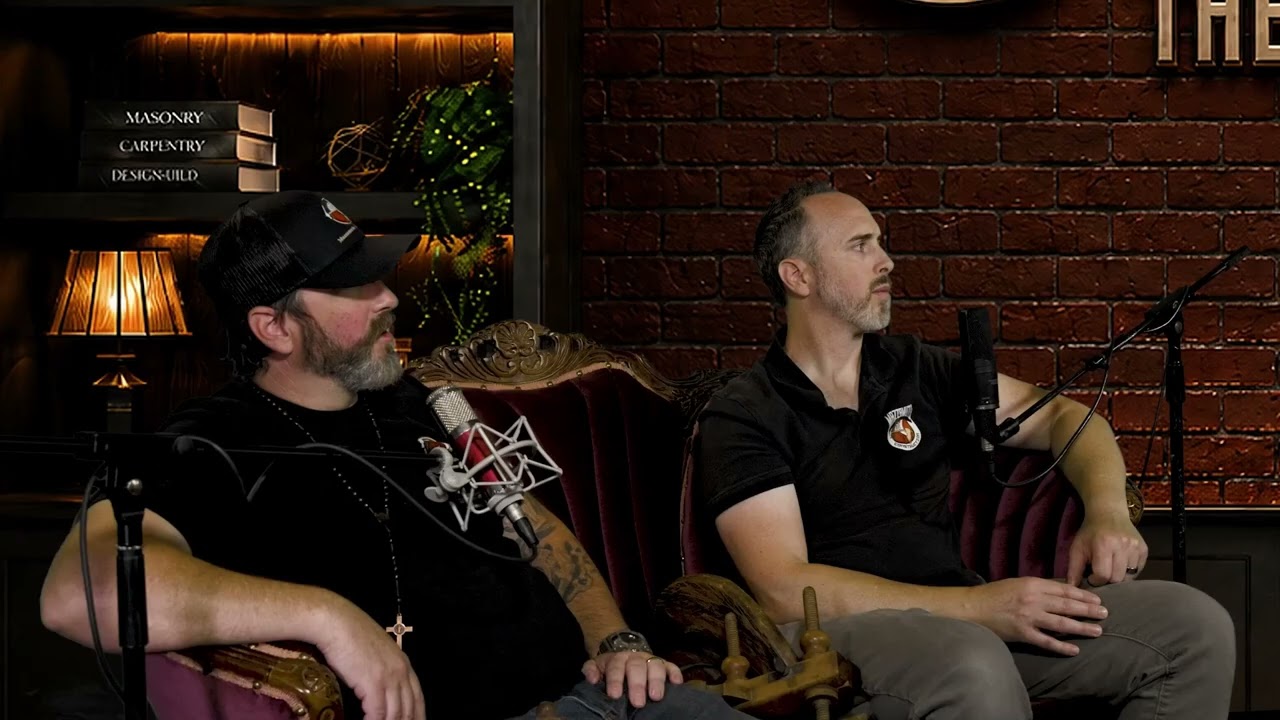
About 15% of contractors are real craftsmen, says James Mazzamuto, who started in the trade at seven years old in Sicily. In this episode of The Mazzamuto Method, Gino and Mario Mazzamuto of Mazzamuto Construction in Martinez, California, sit down with their father to explain how to spot a bad contractor before they cost you money.
The short answer: Bad contractors tend to cut the corners you will never see, and a lowball bid has to catch up with reality, usually on your project. James says only about 15% of contractors today are real craftsmen, so judge experience and workmanship rather than a fast estimate.
By Gino and Mario Mazzamuto, Mazzamuto Construction. Published July 16, 2026.
How Many Contractors Today Are Actually Skilled Craftsmen?
James puts it bluntly: about 15%. “A house has multiple layers of craft you need to know,” he explains, someone might be great at installing a window or a door, but that’s a fraction of what a real carpenter needs to master. In the old apprenticeship system, a craftsman spent years learning every layer before being trusted on his own.
“You’re looking at maybe fifteen percent who are real craftsmen, because they may be really good at one area, putting in a window or a door, but a house has multiple layers of craft you need to know.” (James Mazzamuto)
How Can You Tell If a Contractor Is Cutting Corners?
The corners that get cut are usually the ones you’ll never see, under a house, inside an attic, behind a wall. James spent years in the termite business and saw it firsthand: work that would never pass inspection if anyone bothered to look. Cheap materials are the other tell, OSB siding, MDF trim, adhesives that off-gas formaldehyde for years after the crew leaves.
“They gotta cut corners, cut corners or walk out, scream at their guys, patch things up when nobody sees it, especially work under a house or in an attic the customer won’t see.” (James Mazzamuto)
Why Do Some Contractors Give Suspiciously Low Bids?
A lowball bid has to catch up with reality eventually, and when it does, it’s usually the customer’s project that pays for it. James has seen it play out the same way for decades: the contractor underbids, starts losing money, and either cuts corners nobody will see or walks off the job entirely.
“It’s not the customer’s fault you’re losing money, that’s your fault, you underbid it, you didn’t do it right.” (James Mazzamuto)
What Should You Actually Expect From a Contractor Who Does It Right?
Gino tells a story from when he was fourteen, washing down a client’s driveway at 7pm after a long day on a job site. He asked his dad why they were bothering, the answer stuck with him for life.
“‘Cause if the customer gets a nail in their tire, that’s the only thing they’re gonna remember about this whole job.” (James Mazzamuto)
That’s the standard: everything clean, no messes left behind, the job site treated better than your own house, because you’re a guest in someone else’s home while you build it.
Why Does Real Experience Matter More Than a Fast Estimate?
James describes asking a Home Depot contractor desk employee a simple question: how many of the guys buying materials each morning actually know how to install what they’re buying? The answer, most of them are looking it up on YouTube in the parking lot before they get to the job. The homeowner has no idea.
What Makes Mazzamuto Construction Different?
Three generations, one company, since 1958, and a simple rule that’s carried it the whole way: never blame the customer for a contractor’s mistake, and never let a job you’re losing money on turn into a job you cut corners on.
Frequently Asked Questions
What percentage of contractors today are genuinely skilled craftsmen?
According to James Mazzamuto, roughly 15%, most contractors are only strong in one narrow area rather than trained across every layer of a job.
What are the biggest red flags of a bad contractor?
Corner-cutting in places you can’t see (under floors, inside attics, behind walls), suspiciously low bids, high crew turnover, and cheap materials like OSB siding or MDF trim that off-gas over time.
Why do low contractor bids sometimes turn into a bad experience?
A bid that’s too low to actually cover the work often forces the contractor to cut corners or abandon the job once they start losing money, the customer ends up covering the gap either way.
How long has Mazzamuto Construction been in business?
Since 1958, three generations of the Mazzamuto family, starting with James Mazzamuto in Martinez, CA.
What should I look for in a contractor before hiring one?
Real craftsmanship across multiple trades (not just one), transparency about pricing and timelines, a clean and respectful approach to your home, and a track record of long-term employees rather than constant subcontractor turnover.
Key takeaways from this episode
- Real craftsmen know every layer of a house, not just one trade.
- Corners get cut where you cannot see: under the house, in the attic and behind walls.
- A lowball bid catches up with the project, through cut corners or a contractor who walks off the job.
- A good contractor leaves the site clean and treats your home like a guest in it.
Keep reading
- Why the cheapest contractor bid is so risky (Episode 10)
- How to spot unvetted subcontractors (Episode 7)
- How much a remodel really costs: estimates vs. guesstimates
- Custom home construction in Contra Costa County
- How to choose a remodeling contractor in the Bay Area
- All episodes of The Mazzamuto Method
Thinking about a remodel in Contra Costa County or along the 680 corridor? Get a real estimate.
About the show: The Mazzamuto Method is Martinez’s construction podcast. Hosted by Gino and Mario Mazzamuto of Mazzamuto Construction, ranked in the top 1% of California contractors. Serving Martinez, Walnut Creek, Danville, Alamo, Lafayette, Orinda, Moraga, Pleasant Hill, Clayton and San Ramon. Mazzamuto Construction Inc. · CSLB #1116913 · 837 Arnold Drive, Suites 210 & 220, Martinez, CA 94553 · (925) 228-7376.
Full Episode Transcript
Click to read the full conversation
Guests: Gino Mazzamuto (host), Mario Mazzamuto (host), James Mazzamuto (father, three-generation builder, born 1945 in Sicily). Runtime 1:04:31.
Gino (00:36): Welcome to the Mazzamuto Method. I’m your host Gino. And I’m Mario. And today we got special guests, our father and Captain General. He holds a lot of titles.
James (00:47): James.
Gino (00:51): So Dad, tell us a little bit about yourself. Tell us where you were born, your background.
James (00:57): Okay, so I was born in a small town in the Mediterranean called Tomazo Natale, and the town I stayed in a lot because my relatives were there was called Spericavallo, right on the water, the Mediterranean, these are small villages. I was born in 1945, so right after I was born, within three weeks, World War Two ended. So that’s my background, my roots.
Gino (01:35): What’s that photo we have of you? Is that after the war? It was kind of demolished.
James (01:43): All the pictures are probably mostly from 1949.
Gino (01:46): So you drank from central fountains?
James (01:49): There was no running water, no electricity. We were lucky ’cause we had a fountain right on the corner of our house, of the block.
Gino (02:08): In that photo, that’s you standing with your back to the camera, who else is in it?
James (02:16): That was my sister and my two aunts. One was getting water out of the fountain, the other was sweeping the street, it wasn’t really a street, just gravel and mud.
Gino (02:30): That was your older sister, Lena. You two were born in Sicily, Mary was born here in the United States. How old was Lena?
James (02:39): Three years older than me.
Gino (02:50): So you grew up in Sicily, war-torn, Tomazantali, Spercavalo, both provinces of Palermo, right?
James (03:03): Right next to, these are all connected small towns. Spercavalo’s on the water, right next to Isula the Femini, where Joe DiMaggio’s parents originated from.
Gino (03:23): Didn’t Frank Sinatra’s grandparents come from there too?
James (03:25): Francis’ mother was from three towns up, not connected, but fairly close. Your dad was a woodworker, built doors for churches, mostly the heavy big ones.
Gino (03:50): In the photo of you, your dad, and Uncle Frank, who wasn’t your relative yet, he later married your sister, you were four.
James (03:58): Four. He was an apprentice.
Gino (04:14): So your dad had his trade over there, then you came here. What year?
James (04:23): My dad came here in 1954, I came in 1955.
Gino (04:33): Did you immediately start building cabinets?
James (04:38): No. My dad’s first job was at the Martinez cannery, my mother was related to Sal Graziano, who ran it. Nobody spoke English in that cannery.
James (05:06): They’re all Europeans. It canned peaches and tomatoes. The original Martinez Cannery, the waterfront where the gymnasium is now, canned sardines back in the early 1900s before switching to fruit.
Gino (05:56): How long after you came to America did you start doing construction?
James (06:02): We lived on Buckley Street, a block from the cannery, right next to Joe DiMaggio’s uncle, Salvatore DiMaggio. Our street was primarily Italians from Sicily, mostly fishermen. That’s where I grew up speaking Sicilian, it’s all I could speak, I couldn’t speak English.
Gino (07:16): So tell us how you guys started working.
James (07:20): I was going to Martinez Elementary. My dad worked about eight months at the cannery making pallets. Then an Italian contractor, Charlie Marietti, who started his business in 1936 and hired all the Europeans, took my dad on.
Gino (08:10): One thing, you at four or five, 1949, standing with your dad, and this saw is in the photo.
James (08:39): Yep. He had bigger saws but he made this one.
Gino (08:46): Handmade saw, what kind of wood?
James (08:51): No idea, probably oak. He made that.
James (09:00): This is primarily what you used to cut everything ’cause there was no electricity. This turns the blade for angles, so you can cut arches, straighten it for straight cuts. For that era, it was modern. He had to make it himself as an apprentice, you had to make your own tool if you needed to use it.
Gino (09:48): Exactly. No Home Depot.
James (09:56): No hardware stores, nothing. You had to make it, or find someone who made it for you, craftsmen who made tools specifically for the trades.
Gino (10:01): It’s amazing, you couldn’t just pick up a tool and do the work, you had to create the tool first.
James (10:31): All of Europe was built that way. A mason cutting marble, nowadays it’s done in Carrera by machine. In the old days they’d use a string, a man pulling on both sides for a whole day, to cut two inches of marble.
Gino (10:56): Do you notice the difference in the way guys like your dad treated their tools versus nowadays?
James (11:06): My dad, if you mistreated his tools, he’d run you out of the shop. You had to respect the tools.
Gino (11:13): Because nowadays you can just go buy another one.
James (11:58): This piece here, forty, fifty pounds, a plane that took two people to use, tied with rope, one person guiding, one pulling. This didn’t come from Europe, it came from the United States. It was owned by the head barrel maker of Christian Brothers Winery, which was in Martinez at one time.
James (12:45): I got this from the wife of the barrel maker I worked for in 1972, we were remodeling her house on Haven Street. Her husband had passed away in 1929, worked for Christian Brothers first in Martinez, then commuted to Napa. This is a piece of history.
Gino (13:31): Just from the marble taking two people, think about the forearms of all the guys who worked in the cabinet shop as a kid. Popeye forearms.
James (13:45): Yeah, big arms. There was a guy, Medina, from Spain, only about five-two, but powerful. All the Europeans were powerful, not tall.
Gino (14:16): Is that where “old man power” comes from, guys working with their hands all the time?
James (14:19): I guess. This should be in a museum. This is a beast.
James (14:36): This piece here shapes an arch, you start with a flat beam, chisel it out by hand as much as you can, then use this to shave it. Could take days depending on the size of the arch.
Gino (15:13): You can feel where it’s worn down from tens of thousands of hours of use, probably why they’re made of hardwood, so heavy.
James (15:28): Like rock. White oak.
James (15:53): Even when we ran the cabinet shop back in the sixties, we had one guy, Joe Cornillo, couldn’t speak a word of English, his whole job was to sharpen all the chisels.
Gino (16:23): This isn’t a regular chisel, it has a curve, not just one plane of the blade. Imagine how hard that is to sharpen.
James (16:47): By hand. Joe’s job was to sharpen all our handsaws and planes.
James (17:13): One plane was for big work, another created archways for doorways and windows, churches have door arches, buildings have arches, wherever they were needed.
Gino (17:38): This hand block plane, the curve is made to fit your hand perfectly, built for hours and hours of use.
James (17:53): He made it for his aunt. There was a right-hand and left-hand version.
Gino (18:14): Look at the points on this, how smooth, comes to such a small point, crazy it’s never broken.
James (18:36): Sometimes they’d make an extra one ahead of time, because they wouldn’t have time to make one later if it broke.
Gino (18:41): This was once just a solid piece of wood, somebody had to think through carving the middle section so pieces fit inside, a bolt on the bottom that slides in so the metal sits flush. Imagine the hours that went into it.
James (19:48): This piece adjusts the depth of the blade, you start with short shavings, then adjust deeper.
Gino (20:13): That’s why they respected the tools, if you broke one, it could take days or weeks to make another.
James (20:44): This tool could go back to the 1700s or 1800s, depending on the country. Sicily, being an island, was about forty-five to fifty years behind the United States in advancement, we didn’t get phones or radios until the fifties.
James (21:12): This one adjusts to depth and makes multi-layered moldings, shaped in layers, all one piece.
Gino (21:45): Crown molding, door casing, all hand-navigated.
James (22:01): Also used as a guide, you can angle it.
Gino (22:11): It even has a piece of molding on it to show what you’d be working toward. And how did they thread wooden threads?
James (22:23): The benches I have all have wooden vices, all wooden.
Gino (22:32): The technicality to keep them square, the threads have to be perfect or everything’s off.
James (22:47): My dad would spend hours in the basement sharpening and adjusting tools, constant work because the tools were primitive, given to him, we couldn’t afford to buy new ones.
Gino (23:07): When you go into older homes with trim around door casings or cabinets,
James (23:23): If it was built in the 1800s or early 1900s,
Gino (23:27): Nowadays people jump between trades. Back then people were dedicated to one fine kind of woodwork. Nowadays you get a piece of MDF or pine molding already made, nail it on with a nail gun.
James (23:56): That’s garbage. I hate the smell, you can smell the glue and chemicals. I won’t have it, wouldn’t put it in my house.
Gino (24:03): I was thinking about this driving by an ADU being built in our neighborhood, most houses now use OSB siding.
James (24:06): Another garbage. That smell transfers through the wall eventually.
Gino (24:39): An inferior product, what happens when it gets wet? They use formaldehyde and different chemicals.
James (24:52): I’ve never used it.
Gino (24:58): In older homes we used plywood, nowadays any molding around a door is pine or MDF nailed on with a nail gun. Somebody had to hand-cut and hand-nail this trim, sometimes even make their own nails.
James (25:30): In the old days you wouldn’t throw a nail away. The nails were square, in the old country, the people who made horseshoes made the nails, all different sizes. If you had one, you’d straighten it and save it.
Gino (25:51): Like when we remodeled my place, we took out tons of square nails.
James (25:56): Boards that were an actual inch and a half thick, supposed to be the same board now.
Gino (26:02): With oak or walnut, you’re not nailing through it right away, you need to drill first.
James (26:12): You had a smaller drill, like an old whisking auger.
Gino (26:24): Source the wood, mill it, finish it, drill it, nail it, but what amazed me was their joints were so tight, no caulking gun needed.
James (27:00): That was part of the craft, you were rated on how tight you could make it. You could make putty from sap and fine sawdust of the same wood mixed with glue, that was your putty.
Gino (27:46): These guys dedicated their whole lives to one thing because it took so long to master.
James (27:56): They were masters, well known all over. If you made five cents a day, that was a lot of money. Same with the people who made violins, Stradivarius, worth a hundred, two hundred thousand now, made five, six hundred years ago, mostly out of Germany, Italy, Spain.
James (28:41): It’s almost like a different planet now. Nobody knows how to even start making a tool without running to Home Depot or Lowe’s. A carpenter from the old days wouldn’t fit in with a carpenter today, those guys were so precise, took their time. Nowadays it’s about speed, contractors give a time limit, “this wall needs to be done in two days.” In the old days that same wall could take a week.
Gino (29:46): The problem is the degradation of materials, OSB, MDF. Driving by that ADU, the first thing I saw was a pile of garbage on the sidewalk, OSB siding on the wall. Most people hiring contractors don’t understand what’s going into their house. I had a customer who moved to a new house and said she couldn’t even open her cabinets because the smell of formaldehyde was so bad.
James (30:54): She was smart enough to smell it, a lot of people get used to the smell, don’t know what it is.
Gino (31:04): What about off-gassing of carpets?
James (31:08): That’s part of the problem with asthma and other issues. People are getting smarter about it now.
Gino (31:19): There’s been degradation of materials, but also craftsmanship. I joke that nowadays somebody puts a toolbox on the back of a truck and suddenly they’re a carpenter, where back in your day you’d go through years of apprenticeship. Let’s talk about Frank in that old picture, Papa’s apprentice. What did an apprenticeship look like back then?
James (31:36): Most families had seven, eight, ten kids, couldn’t afford to send a kid to school. As soon as he was six or seven he had to help, barber shop, shoemaker, cabinet shop, marble shop, they’d take on the seven-year-old for free through a family connection. He’d sweep the shop, sand all day for months until good at it, then move to drilling small holes with an auger, then chiseling, then pounding a nail without splitting the wood. That was the path to becoming a craftsman, it took years. By twelve he might be good enough to work alongside a real craftsman, only doing what he could handle. Very hard to get into the trades, otherwise you’d be sweeping the floor for five years.
James (34:36): My dad started at seven, by fourteen he was already a craftsman, some pick it up faster, he was strong, you needed both strength and mentality. I once asked a guy at the Home Depot contractor desk how many of the people buying materials each morning actually know how to install what they’re buying. He said nobody’s ever asked him that, what he’s seen in five to eight years at that desk is guys looking it up on YouTube in the parking lot before the job. They have no idea how to install the product they’re buying for somebody’s house, and the homeowner has no idea this guy has no experience.
Gino (37:09): This is why in the era we live in, most people think of a contractor as maybe shifty, cuts corners. Was that a thing when you were growing up?
James (37:28): No, no, no. People worked six days, sometimes seven. My relatives worked six and a half, six and three-quarter days. They knew their trade and would argue about how good they were, their trade was everything, because you were known in the village for how good you were.
Gino (38:39): This is what we struggle with day to day, people come in with previous notions about contractors before they know us. You’ve done tens of thousands of jobs, how many ever called you back?
James (39:09): I don’t want callbacks. We’ve gone through a lot of men since we started, good and mediocre, had to thin them out. My dad only had three people in the cabinet shop. He’d have a new guy just watch him work for a day or two, big table saws, shapers, a joiner, sounded like a jet, and by the third day the guy wouldn’t show up, because he realized he couldn’t do what my dad was doing and was too embarrassed to say so. He thought watching would be enough, thought he knew cabinets from another shop where he’d just done one piece of the process all day, every day. Coming into a shop to do the whole thing, suddenly he’s all thumbs.
James (42:40): It took enormous strength, two table saws, a big band saw, joiner, shapers, everyone had a pile of sawdust. We had seven, eight, ten dogs, they’d end up in the basement, one would sleep right under the bench where the sawdust came out until all you’d see was a dog head buried in sawdust. They liked the warmth and the noise.
Gino (43:54): He basically lived in that basement working, Nana would have lunch ready and he wouldn’t come up for two hours, food got cold, she’d threaten to throw pots at him.
James (44:17): She cooked from scratch and he wouldn’t come up, for an Italian, that’s a sin. He was a workaholic.
James (44:58): We have good craftsmen now too, Mike Cush, Dutch, one of two Dutch carpenters we’ve had, great workers, their tradition is making their own shoes out of wood, that’s how skilled they are. Most craftsmen way back couldn’t speak much English early on. Here’s the theory, if you can talk about what you can do, sometimes the guy who tells a good story, fifty percent of it isn’t true, he’s just extending what he can actually do.
James (45:55): I can always feel it, always tell. My dad would say, in about five hours I’ll know what this guy can do, and that’s exactly what would happen. A day would go by and he’d say this guy’s no good as a carpenter, but we can use him as labor.
Gino (46:26): That’s the point, nowadays all the guys on our crew are really the top of what they can do.
Gino (46:55): Nowadays “contractor” or “carpenter” gets treated as one thing, but they’re really different, the way we run the company, low turnover, some guys twenty years.
James (47:22): We used to have guys, Nesta was the last one, thirty-five years with us.
Gino (47:29): Most construction companies use majority subs, don’t have their own employees, hire whoever’s available.
James (47:46): It’s all about the price they charge and whether they can do it, the field is wide open.
Gino (47:56): Mike Cush told a story, his last company, doing jobs in the Oakland hills, the owner would come down and say “I need sixty percent margin on this, hurry it up.” That’s the difference.
James (48:11): That’s what most people do. If a foreman came in behind me pushing a guy to hurry up, I’d tell him to get out, don’t yell at him, he’s doing a good job. If it takes today into tomorrow, that’s what it’s gonna take to finish it right.
Gino (48:56): That’s my point, you have contractors running construction companies who don’t even have construction experience, maybe they were realtors, hiring subcontractors, high turnover, low craftsmanship.
James (49:26): They don’t last long. We’ve been doing this since 1958. Take the Lafayette job, a couple came in the other day whose whole bathroom had been torn out and sitting like that for who knows how long, because they’d hired someone who was still figuring out the trade on their job. The customer doesn’t know anything about it, they’re trusting you, like taking your car to a mechanic you’re not yourself.
Gino (50:11): The problem is the industry has so much corruption in it now.
James (50:25): There are a few good contractors, even in this town, Tony the Kite Man, one of the most honest contractors in this town, equal with us, I’d recommend him for anything, he won’t leave a job until it’s done right.
Gino (50:58): Shout out to Tony Jentlin. Let me ask, today, what percentage of guys in the trades are real craftsmen, out of a hundred percent?
James (51:29): You’re looking at maybe fifteen percent. Because they may be really good at one area, putting in a window or a door, but a house has multiple layers of craft you need to know. The carpenter has to know more than any other trade, but also has to know his limits, I wouldn’t touch electrical, I want an electrician. I’ve seen carpenters say “I can do electrical”, no, that’s too important, needs an electrician, same with plumbing.
James (53:06): My hands are skinny now, I’ve lost weight, I’m getting old, but my dad had big hands, thick thumbs.
Gino (53:21): Those are the real tools right there, everybody knew your dad for his big hands, skinny guy but thick hands.
James (53:33): A lot of craftsmen in the old days had a muscle in every finger from the work. I had really thick calluses at one time, don’t work like that anymore.
James (53:53): My dad’s hands were so thick he’d get slivers and never even know it, we called slivers “carpenter jewelry” because they stay with you.
Gino (54:04): The difference is the way you raised us, I remember trying to dig a hole on a job site and you’d come take the shovel away from me.
James (54:12): I did that with my grandson too, Nicholas, he’s thirty-three now, working a job for me. I took the shovel away, showed him, and he stepped back because he was afraid. I told him, don’t be afraid of the shovel, here’s how you use it.
Gino (54:58): I have a story from when I was fourteen, driving your old Chevy truck on a job site at seven o’clock at night, washing down somebody’s driveway.
James (55:32): We washed their driveway at the job site.
Gino (55:38): I was a teenager, wanted to go home, asked why we were bothering. You said, “‘Cause if the customer gets a nail in their tire, that’s the only thing they’re gonna remember about this whole job.”
James (55:50): Everything has to be clean, can’t leave any messes, that’s the hard part about remodeling, people are living in the house you’re working in.
Gino (55:53): That’s a guiding principle down to the smallest part of the job, if you don’t do it right, you slowly erode the quality of everything.
James (56:17): You gotta keep telling the guys, this has to be done this way, can’t leave a mess, cleaner than your own house, because you’re working in somebody else’s.
Gino (56:33): Who’s the newest apprentice doing the cleaning work, your grandson? Your son?
James (56:43): Your son, yeah, he’s learning the trade.
Gino (56:50): That’s the fourth generation, you guys argue like brothers.
James (57:02): He’s gotten to the point where he knows exactly what I’m gonna say to him. A coach is gonna tell you what you’re doing wrong whether you like it or not, a coach isn’t there to please you, neither is a teacher.
Gino (57:31): That’s the mentality that separates the work we do, even at that young age, as the fourth generation, he’s getting the same treatment we all got growing up: get it right, or you don’t do it right.
Gino (58:00): That’s how you stay in business, balancing quality versus sustaining the business, paying bills. That’s where most companies fall off. We compete with people who do “equal” work.
James (58:32): We’ve always had that competition.
Gino (58:38): Our customers know that, I was talking to Bill and Ann today, they said “you guys are really busy,” and I don’t think there’s ever been a time we’ve been slow, even when Papa was running the company, consistent repeat customers and recommendations.
James (59:08): We were never slow because we had the cabinet shop, a completely separate business from the construction company. Until the eighties and nineties we didn’t go outside of Martinez for work, for thirty-six, thirty-seven years.
Gino (59:47): You only had three contractors in Martinez at the time too.
James (59:51): More than three, but a lot of contracts were going out of town. They thought I was crazy for not going out, when Blackhawk started, they wanted me to go there doing million-dollar houses back in the eighties. Biggest job here was 25, 30, 40 thousand bucks. I wasn’t impressed, said I’m not going anywhere.
James (1:00:16): I already know where Blackhawk is, go over there, and in a year when you come back, you’re not gonna pay attention to your customers anymore, because you’ll say you don’t have time for their little job, you’re working in Blackhawk.
Gino (1:00:58): That goes to your saying about managing quality versus finances, some jobs you might lose a little money to do it right. What was your saying about that?
James (1:01:20): It’s not the customer’s fault you’re losing money, that’s your fault, you underbid it, you didn’t do it right. You never tell the guys, or the customer, that you lost money, it’s not their fault, it may not be yours either, but that’s the way it goes, you finish the job.
Gino (1:02:04): That’s why we’ve always been consistently busy, most contractors, when they start losing money on a job, pull off it.
James (1:02:16): They gotta cut corners, cut corners or walk out, scream at their guys, patch things up when nobody sees it, especially work under a house or in an attic the customer won’t see. That was my termite work, we had to have it done right.
Gino (1:02:41): That’s the sustaining process, leave a job better than you started it, keep the customer happy, that gives you the next job.
James (1:02:52): It’s because I like my work. If you get into this thinking you’ll be a multi-millionaire in ten, fifteen years, wrong trade, go to the stock market, might make you bankrupt sooner. This trade is a marathon. I’m still going on jobs, sometimes I question myself, but then I think, no, I really like doing it.
Gino (1:03:25): What else would you be doing? I think that’s a good way to wrap it up, we brought some history, a man who knows a lot of history. The point of these podcasts is for you to get insight and knowledge, whether you’re a contractor, a homeowner, or just interested, these are the things that go on behind the scenes that the average consumer doesn’t know. If you learned anything, like and subscribe, we’ll keep coming week after week with more stories from my father and other guests. I’m Gino Mazzamuto.
Mario: I’m Mario Mazzamuto.
James (1:04:23): Salvatore. Yeah.
Gino (1:04:25): Mazzamuto. All right guys, thanks everybody. Take care. Thank you.