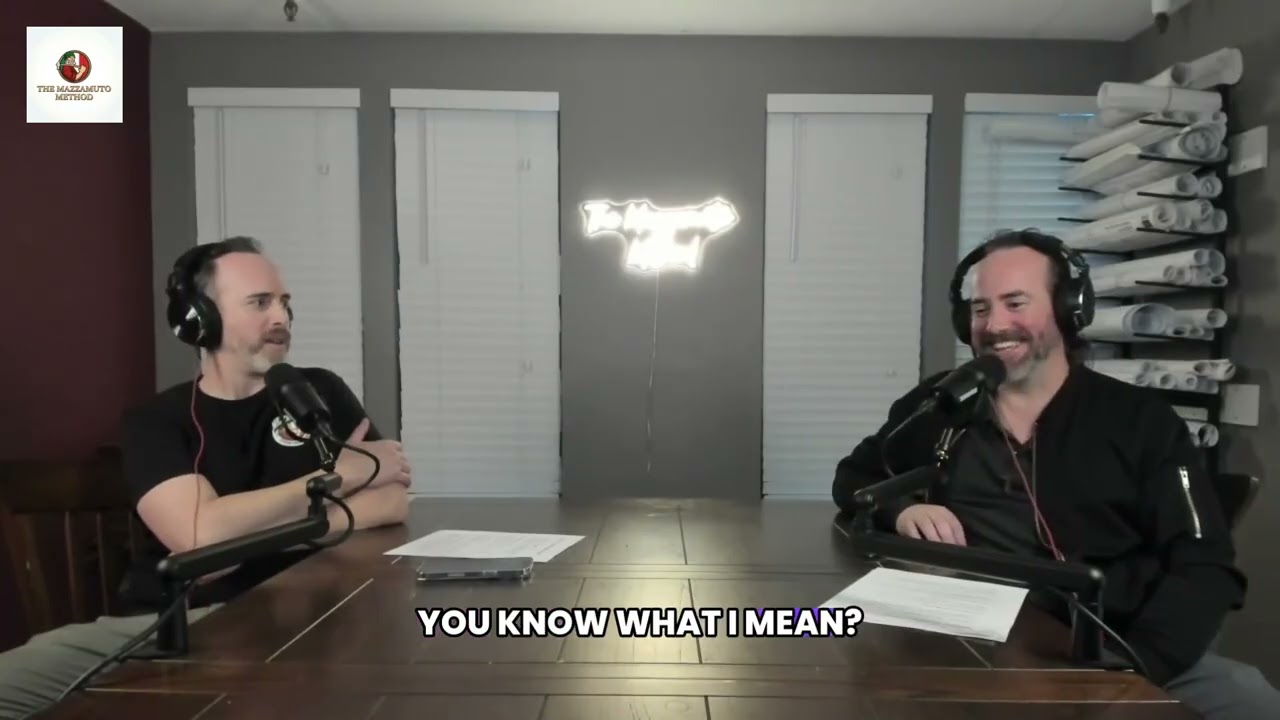
Using subcontractors is normal; selling a job first and then searching for strangers to build it is the problem. In Episode 7 of The Mazzamuto Method, brothers Gino and Mario Mazzamuto of Mazzamuto Construction in Martinez, California, explain what they call the sub economy and how homeowners can spot it.
The short answer: A contractor who sells your project with no crew, then posts online for unvetted trades, exposes you to risk in quality, schedule and your deposit. Ask how long they have worked with their subcontractors, whether everyone is licensed, and to see a detailed line-item estimate.
By Gino and Mario Mazzamuto, Mazzamuto Construction. Published March 4, 2026.
What is the “sub economy” in construction?
Inside private Facebook contractor groups, the brothers kept seeing the same pattern: a contractor sells a project to a homeowner, then posts online looking for strangers to build it.
Contractors will go out, get jobs, sell jobs to homeowners, and not have anybody to complete those jobs.
The posts are vague, no blueprints, no specifics, just “I’m building a 1,500 square foot ADU, looking for all the trades.” Strangers respond with prices like “I’ll frame that thing for you for $10,000, I can start tomorrow,” sight unseen. As Mario puts it, “if that’s not a red flag, I don’t know what is.” Many of the people answering those posts aren’t licensed; they jump from job to job precisely because they have no legitimate business behind them. To be clear: using subcontractors is normal. The Mazzamutos use subs too, it’s the nature of the business. The problem is unvetted subs assembled after the contract is signed. A real builder calls an A-team he has worked with for 5, 10, 20, even 30 years, and keeps trained crews on staff for control and quality.
Why should homeowners care who a contractor hires?
Because you carry the risk. A contractor who guarantees a project he can’t staff is, in Gino’s words, taking on “a bunch of liability”, and “making the client take on a massive amount of liability” right along with him. If the crew is a group of strangers found on Facebook on Friday who can “start Monday,” the quality, the schedule, and even your deposit are all exposed. And the brothers note the most important part: if homeowners knew their project was being staffed this way, they wouldn’t hire that contractor in the first place.
Why is the cheapest bid usually the most expensive mistake?
The episode is blunt that homeowners are part of the problem, because most ask only two questions:
How much does it cost and how quick can you get it done? When they get estimates and they see an estimate that’s $10,000 cheaper, they don’t question why is it $10,000 cheaper.
A dramatically lower bid usually means something is missing, licensing, insurance, overhead, scope, or the intention to finish at all. The brothers describe homeowners who “saved $150,000” self-managing a project without counting the time, headaches, and mistakes that passed inspection anyway. And when a homeowner beats a small tradesman down on price, there’s a hidden cost on the other side too: crews that don’t get paid, corners that get cut, and resentment built into your project.
Should I get three estimates for my remodel?
The brothers land on a nuanced answer: one or two comparison estimates can be healthy, but not as trading cards to beat contractors against each other. The popular “take the middle bid” theory doesn’t hold up:
It could be that the one that’s too low is gonna steal your money… the one in the middle might be somewhat in between and kinda knows what he’s doing but still bid too low… and the one that is high could be right on the money.
What actually matters is the due diligence you can see inside the estimate. A scientific estimate lays out the scope of work, material prices, and line items, “show me your work,” like a math teacher. A “wag and swag” estimate is a broad guess with padding. Mario’s better path: ask friends, family, and neighbors; if you hear the same name twice and the referral comes with a relationship that ended well, built-in trust beats bid collecting. Citing negotiator Chris Voss’s Never Split the Difference, he adds that mutual respect, not beating a tradesman down, is how you actually get the best price and the best work.
What questions should I ask before hiring a contractor?
Straight from the episode:
- How long have you worked with your subcontractors? A vetted, long-term team is the single clearest sign you’re not funding a sub-economy experiment.
- Are you and your subs licensed? “I never asked for a business license” is not a defense after the fact.
- Can I see a detailed, line-item estimate? Look for scope, materials, and pricing you can verify, not broad verbiage.
- Why is your price what it is? A contractor who can defend every number is showing his work.
- Do you have a backlog? Good builders are booked. “If it’s Friday and you’re talking to somebody and they go, I can start Monday, that’s where all the problems are gonna arise.”
The bottom line for homeowners
The Mazzamutos’ closing point is that education protects everyone: “What we’re trying to do is make customers as knowledgeable as we can.” Contractors are people with families to feed, and homeowners deserve builders with real teams, real licenses, and real estimates. Vet the operation behind the sales pitch, who does the work, how long they’ve worked together, and how the numbers were built, and you’ll avoid becoming the next cautionary tale in a Facebook group. Planning a kitchen, bathroom, addition, or ADU in the East Bay? Mazzamuto Construction builds with vetted, long-term crews. Reach out through our contact page to start the conversation.
Frequently Asked Questions
Is it bad if my contractor uses subcontractors? No, nearly all builders use subcontractors; it’s the nature of the business. The red flag is a contractor who sells your job first and then searches for unvetted strangers to build it. Ask how long they’ve worked with their subs; a design-build firm with long-term crews keeps control of quality from plans through punch list. Why do kitchen remodel estimates vary so much between contractors? Because estimates are built differently. A detailed, “scientific” estimate itemizes scope, materials, and labor; a “wag and swag” estimate is a guess with padding. A bid that’s $10,000 cheaper usually means something is missing, licensing, insurance, overhead, or scope. Compare the due diligence inside each estimate, not just the bottom line. See kitchen remodeling. How many estimates should I get for a home addition? One or two comparison estimates are reasonable, collecting three to five just to bid contractors against each other backfires. The “pick the middle bid” theory fails because the low bid may never finish, and the high bid may be the accurate one. Prioritize referrals, a visible track record, and a line-item estimate you can verify. See home additions. How can I avoid getting ripped off when building an ADU? Vet the operation, not the sales pitch: verify the license, ask who will actually be on site, ask how long the contractor has worked with each trade, and be wary of anyone who can “start tomorrow” sight unseen. Good ADU builders have a backlog and a proven team. See ADU construction. How do I know what my project should actually cost? Start with realistic budget research before you collect bids, homeowners who arrive with a grounded number get straight answers fast. Cost guides help you understand what permits, overhead, insurance, and vetted labor legitimately cost, so a too-good-to-be-true bid stands out immediately.
Key takeaways from this episode
- Ask how long the contractor has worked with their subcontractors.
- Confirm the contractor and the subs are licensed.
- Ask for a detailed, line-item estimate you can verify.
- Ask why the price is what it is; a contractor who can defend every number is showing the work.
- Be wary of a contractor with no backlog who can start Monday.
Keep reading
- Why the cheapest contractor bid is so risky (Episode 10)
- Why a well-managed contractor matters (Episode 6)
- Home additions and ADUs in Contra Costa County
- Whole-home remodeling in Martinez and Contra Costa County
- How to choose a remodeling contractor in the Bay Area
- All episodes of The Mazzamuto Method
Thinking about a remodel in Contra Costa County or along the 680 corridor? Get a real estimate.
About the show: The Mazzamuto Method is Martinez’s construction podcast. Hosted by Gino and Mario Mazzamuto of Mazzamuto Construction, ranked in the top 1% of California contractors. Serving Martinez, Walnut Creek, Danville, Alamo, Lafayette, Orinda, Moraga, Pleasant Hill, Clayton and San Ramon. Mazzamuto Construction Inc. · CSLB #1116913 · 837 Arnold Drive, Suites 210 & 220, Martinez, CA 94553 · (925) 228-7376.