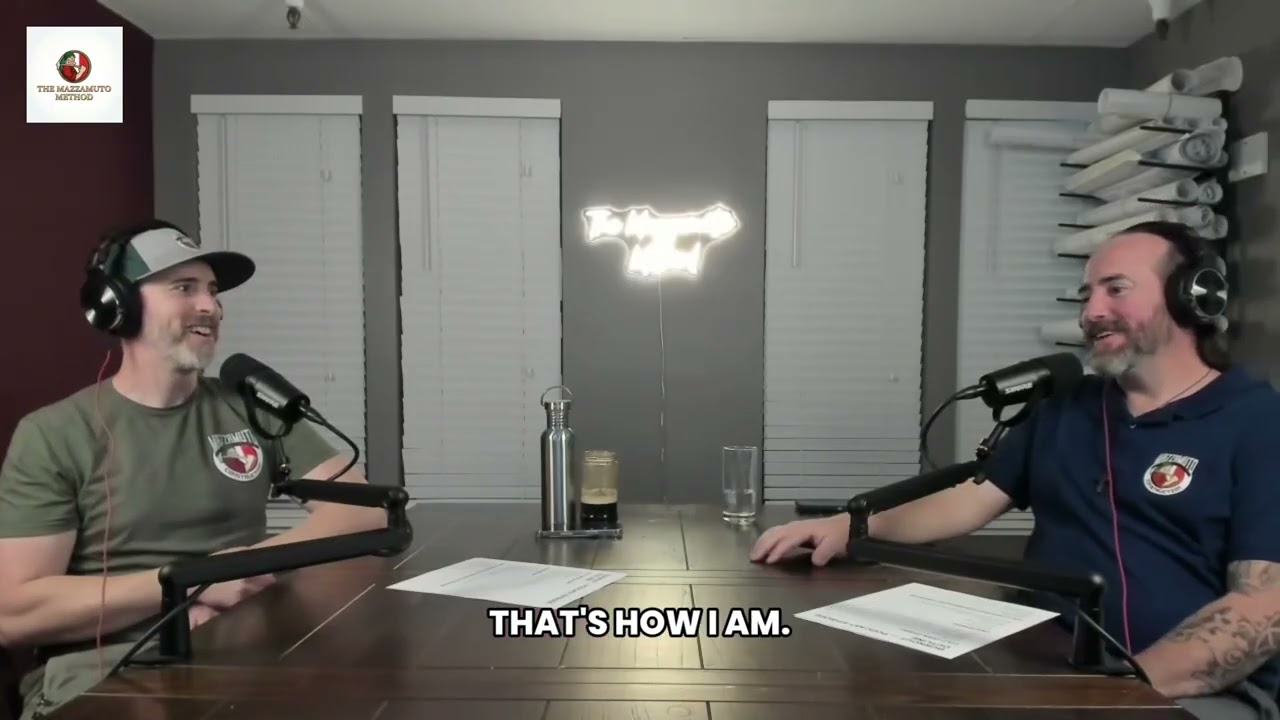
Contractor burnout shows up on your project as missed calls, late invoices and a short temper. In Episode 8 of The Mazzamuto Method, Gino and Mario Mazzamuto of Mazzamuto Construction in Martinez, California, explain the pressure of running a construction company and the systems they built so that stress never lands on the client.
The short answer: Ask who answers the phone, who tracks the budget and who follows up on paperwork. A contractor with real administrative systems, delegation and a calm answer about past job-site surprises is one whose full attention goes to your project instead of digging out from an overload.
By Gino and Mario Mazzamuto, Mazzamuto Construction. Published March 10, 2026.
What does burnout look like in the construction industry?
It starts quietly. As Mario describes it, when an owner burns out, “you start having low threshold for conversations, you get kind of snappy with people, you’re short… it’s gonna have a negative effect all the way down.” In construction that cascade runs from the owner to the field crew to your kitchen.
The brothers are candid that they didn’t start out calm. Gino remembers early years of tension headaches, clenched fists on the couch, and one sleepless night after a client called at 7 p.m. convinced her waxed hardwood floors were ruined by a crew’s cleanup water. The next morning the water had dried and the floors were fine. The lesson stuck:
In business you learn that there’s always a solution to most things. There’s always a solution… it’s usually not as bad as you think it is.
For homeowners, that mindset matters. Problems happen on every remodel, what you’re really hiring is a contractor’s ability to absorb them calmly. As Gino puts it, “your job is to handle the stress so you guys can focus on work, take the customer’s stress.”
Why should homeowners care if their contractor is organized?
Because disorganization is where projects go to die. The episode describes the classic overwhelmed contractor: “most people’s construction desk, you walk in, they got piles of stuff over here”, unreturned phone calls, invoices that go out late, job costs nobody is tracking.
The Mazzamutos’ answer is delegation. They cite leadership author John Maxwell’s rule: if someone can do a task 75 percent as well as you, delegate it and never do it again. Their company now runs with a project manager, a team of eight virtual assistants handling scheduling, email, invoicing, and QuickBooks, and a lead assistant who sits in every company meeting and runs behind-the-scenes logistics. The result, in their words: “now you can get invoices out on time, you’re responding to text messages, you’re responding to emails… you can track your job costs.”
When you interview contractors, ask who answers the phone, who tracks the budget, and who follows up on paperwork. A builder with real administrative systems is a builder whose full attention goes to your project, not to digging out from under a pile of unopened mail.
How do the best contractors keep improving instead of burning out?
Two habits stand out from the episode.
They protect their own foundation. Mario frames health as the base of the pyramid, exercise, sleep, and recovery, “you got to work on yourself and you got to work on your health… because you’re going to stack all the stuff on top of it, it’s all going to crumble.” Gino decompresses with audiobooks and even video games; the point is deliberate recovery, not white-knuckling through seven-day weeks.
They seek coaching and feedback. The brothers invest in group coaching, mentors, and the accumulated wisdom of their father, a builder turning 80 this year, and veteran team members. “That’s why we engage coaching so we can get to the next level and learn the things that they know.” A contractor humble enough to keep learning is a contractor who won’t treat your project as a place to stop growing.
Does a contractor’s purpose really affect your project?
More than you’d think. The episode’s deepest thread is purpose: people can carry enormous workloads when the work means something. “If you actually enjoy the process, when it does get stressful, it’s not gonna be as taxing on you.” A contractor who genuinely loves building, who grew up finding joy and creativity in field work, as Gino describes, brings that energy to your home. One who is grinding toward a payday brings the grind.
The brothers also share their father’s blunt warning about life without purpose: “once people retire, they sit down in their lounge chair and then they die.” It’s why, at nearly 80, he’s still coaching the company. That multigenerational drive is part of what homeowners are actually buying when they hire a family firm.
What should you take away before hiring a contractor?
- Calm is a credential. Ask a prospective contractor how they handled their last job-site surprise. You want the “there’s always a solution” answer, not panic or blame.
- Systems are visible. Prompt estimates, on-time invoices, and quick communication are the outward signs of a company that has delegated well and isn’t running on fumes.
- Balance shows up in workmanship. As Mario says, “everything in life is balance.” A rested, well-supported crew does cleaner work than an exhausted one.
- Growth mindset matters. Contractors who invest in coaching, mentorship, and modern tools are the ones improving with every project, including yours.
The Mazzamuto Method exists because, as the brothers say, homeowners deserve to learn the inside of this industry. If you want a team that has built the systems, and the calm, to take the stress of a remodel off your shoulders, reach out. That’s literally what we’re structured to do.
Frequently Asked Questions
Why does it matter whether my contractor is burned out or well-organized?
Burnout cascades, a stressed owner gets short with the crew, and quality and communication suffer on your job. A design-build firm with real systems (project management, administrative support, tracked job costs) keeps its full attention on your project.
How can I tell if a contractor runs a well-managed company before I hire them?
Look for the outward signs discussed in this episode: prompt callbacks and emails, invoices and estimates delivered on time, a dedicated person answering the office line, and calm, solution-focused answers when you ask about past job-site problems. Meet our team on the about page.
Something went wrong during my remodel, should I panic?
No. As the episode’s hardwood-floor story shows, most job-site surprises look worse at 7 p.m. than they do the next morning, and an experienced contractor has seen it before. There’s almost always a solution; the key is a builder who responds calmly and communicates quickly. See how we manage remodels at bathroom remodeling.
Does an organized contractor actually save me money?
Yes. A company that tracks job costs, gets invoices out on time, and delegates administrative work runs more profitably and predictably, which means fewer surprises in your budget and schedule. Understanding how contractors manage costs helps you compare bids intelligently. See our cost guides.
How do I start a project with a team that has these systems in place?
Reach out for a conversation. The Mazzamuto team has built its company around taking the stress of construction off the homeowner’s shoulders, and they’re happy to walk you through how a well-run project works from first call to final walkthrough. Contact us.
Key takeaways from this episode
- Calm is a credential: ask how a contractor handled their last job-site surprise.
- Systems are visible in prompt estimates, on-time invoices and quick communication.
- A rested, well-supported crew does cleaner work than an exhausted one.
- Contractors who invest in coaching and mentorship improve with every project, including yours.
Keep reading
- Why a well-managed contractor matters (Episode 6)
- Why the cheapest contractor bid is so risky (Episode 10)
- Bathroom remodeling with Mazzamuto Construction
- Whole-home remodeling in Martinez and Contra Costa County
- How to choose a remodeling contractor in the Bay Area
- All episodes of The Mazzamuto Method
Thinking about a remodel in Contra Costa County or along the 680 corridor? Get a real estimate.
About the show: The Mazzamuto Method is Martinez’s construction podcast. Hosted by Gino and Mario Mazzamuto of Mazzamuto Construction, ranked in the top 1% of California contractors. Serving Martinez, Walnut Creek, Danville, Alamo, Lafayette, Orinda, Moraga, Pleasant Hill, Clayton and San Ramon. Mazzamuto Construction Inc. · CSLB #1116913 · 837 Arnold Drive, Suites 210 & 220, Martinez, CA 94553 · (925) 228-7376.