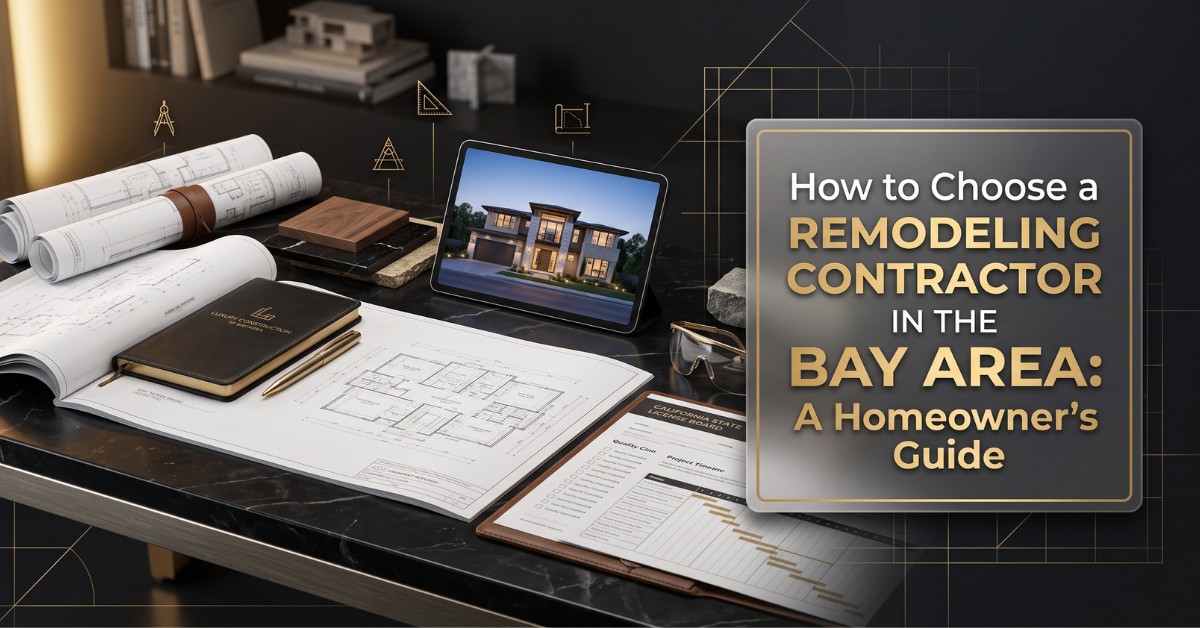
Homeowners spend months choosing tile, cabinets, and paint colors — and often only days choosing the person who will actually build it all. That’s backward. The single biggest factor in whether a remodel is a joy or a nightmare isn’t the design; it’s the contractor. Learning how to choose a remodeling contractor in the Bay Area is the most valuable planning you can do before a single wall comes down.
The good news is that the qualities separating a great contractor from a risky one are knowable and checkable. Here’s what to look for, what to ask, and the warning signs that should make you pause.
Start With the Non-Negotiables: License, Bond, and Insurance
In California, any home improvement project of $500 or more in combined labor and materials must be performed by a contractor licensed through the Contractors State License Board (CSLB). This is the first thing to verify — and it’s easy to do on the CSLB website using the contractor’s license number.
Hiring an unlicensed contractor might look cheaper on paper, but it exposes you to real risk: no recourse through the state if the work goes wrong, potential liability for on-site injuries, and no guarantee the person doing the work has met any standard of competency. The small amount of time it takes to confirm a license is among the best protection you’ll ever buy.
- Active CSLB license. Confirm the license is current and matches the business you’re hiring.
- Bonding. A contractor’s bond offers you a layer of financial protection if work isn’t completed to standard.
- Insurance. Ask for proof of general liability insurance and, if they have employees, workers’ compensation. Without it, you could be exposed if an accident happens on your property.
A reputable contractor will provide this documentation without hesitation. Reluctance to share it is a signal worth heeding.
Weigh Reputation and Track Record
A license gets a contractor in the door; a track record tells you what working with them is actually like. Look beyond a single star rating and read for patterns:
- Consistent reviews across platforms. Check Google, Yelp, and the Better Business Bureau. Strong, steady feedback over years carries more weight than a handful of recent five-star reviews.
- Longevity in the community. A company that has built and stood behind its work locally for decades has a reputation it can’t afford to damage.
- Real references and past projects. Ask to see completed work and, when possible, speak with previous clients about communication, timeline, and how issues were resolved.
Reputation is especially telling in a tight-knit region like Contra Costa County, where word travels and repeat business is earned. A contractor whose clients recommend them to neighbors, and who returns to work for the same families over the years, has built something that no marketing budget can buy. When you read reviews, pay attention to how the company responded to any problems that arose — because problems occasionally do on any project. A firm that handled a hiccup with accountability and professionalism tells you more than one that has never faced a challenge.
Prioritize Local Experience
Bay Area homes come with local realities that an out-of-area contractor may not know. Permitting processes differ from city to city, and communities such as Rossmoor in Walnut Creek carry their own architectural review and HOA approval standards. Much of the East Bay’s housing stock — the mid-century ranch homes of Martinez and Walnut Creek, the hillside properties near Mount Diablo — has quirks that experienced local builders anticipate. A contractor who knows the terrain saves you delays, surprises, and rework.
Understand Their Process and Communication
How a contractor runs a project matters as much as their craftsmanship. Before you sign anything, get clarity on how they’ll actually work with you:
- A detailed written contract. Scope, materials, payment schedule, and timeline should all be in writing. Never rely on a handshake.
- A clear payment schedule. In California, a contractor generally cannot ask for a down payment larger than 10% of the total or $1,000, whichever is less. Be wary of demands for large sums up front.
- Change-order transparency. Understand how changes and unexpected conditions will be priced and approved so there are no billing surprises.
- Communication rhythm. Ask who your point of contact will be and how often you’ll receive updates. Steady communication is the antidote to remodel anxiety.
Red Flags That Should Make You Walk Away
Most problem projects show warning signs early. Trust your instincts if you notice any of these:
- No license, or refusal to provide the license number.
- Cash-only demands or pressure for a large upfront deposit.
- No written estimate or contract.
- Unsolicited door-to-door offers or high-pressure, ‘today only’ pricing.
- Vague answers about insurance, permits, or who will actually be on the job.
A trustworthy contractor welcomes your questions and takes the time to answer them. Anyone who makes you feel rushed or difficult for asking is telling you something important.
Pay Attention to How the Consultation Feels
Beyond credentials and paperwork, the consultation itself is a preview of the whole relationship. Does the contractor listen to what you actually want, or push you toward what’s easiest for them? Do they explain trade-offs clearly and set honest expectations, even when the honest answer isn’t what you hoped to hear? Are they punctual, prepared, and respectful of your time? A remodel is a partnership that can last weeks or months, and communication style matters enormously. If you feel heard and informed in that first meeting, that’s a strong sign; if you leave with more confusion than clarity, take note. Your instincts, backed by the checks above, are a reliable guide.
Questions Worth Asking Every Candidate
Bring a short list to each consultation: How long have you worked in this area? Are you licensed, bonded, and insured? Who will manage my project day to day? What does your timeline look like, and how do you handle delays? Can I see recent work and speak with past clients? The answers — and how openly they’re given — will tell you a great deal.
Compare Bids on Value, Not Just Price
It’s wise to gather more than one estimate, but the lowest number is rarely the best deal. A quote that comes in far below the others usually means something is missing — lower-grade materials, an incomplete scope, or costs that will resurface later as change orders. When you compare bids, make sure each one covers the same scope so you’re comparing like for like. Look closely at what’s included: permits, materials, labor, cleanup, and warranty. A slightly higher bid from a contractor with a proven record, clear communication, and a detailed scope almost always delivers more value than the cheapest option that leaves you guessing.
Understand the Difference Between Contractor Types
Not all remodeling firms work the same way. A traditional general contractor builds from plans you provide, which works well when you already have a designer or architect. A design-build firm handles both design and construction under one roof, which streamlines communication and keeps a single team accountable from concept to completion. Neither is inherently better — what matters is choosing the structure that fits your project and being clear on who is responsible for what. For many homeowners, a builder who can guide both the design conversation and the construction removes a lot of stress and prevents the gaps that appear when responsibilities are split.
Don’t Overlook the Warranty
Quality work should stand behind itself. Before you sign, ask what warranty the contractor offers on labor and materials, and get it in writing. A company confident in its craftsmanship — and one that plans to be around for years to come — will back its work without hesitation. That willingness is itself a signal of the reputation and stability you’re looking for.
Craftsmanship You Can Trust in the Bay Area
At Mazzamuto Construction, we’ve built our name on the very qualities homeowners should look for. We’ve served Martinez and the greater San Francisco Bay Area since 1960, with three generations of craftsmanship, a BBB+ rating, and the honor of being named Best of Martinez 2024. We prioritize your peace of mind, answering every question and addressing every concern before work begins, and we back our reputation with honest, meticulous service.
Choosing a contractor is a decision you shouldn’t have to second-guess. Serving Martinez, Walnut Creek, Pleasant Hill, Lafayette, Orinda, Danville, Alamo, Blackhawk, and Alamo Hills, our team is ready to earn your trust. Contact us today to schedule a consultation and experience the difference that true craftsmanship makes.
Frequently Asked Questions
Q: How do I check if a contractor is licensed in California?
A: Use the Contractors State License Board (CSLB) website. Enter the contractor’s license number to confirm the license is active, matches the business, and has no unresolved issues. Any project of $500 or more in combined labor and materials requires a licensed contractor.
Q: How large a deposit can a contractor legally ask for in California?
A: For home improvement work, a contractor generally cannot require a down payment larger than 10% of the total project cost or $1,000, whichever is less. Be cautious of anyone demanding a large sum up front or insisting on cash only.
Q: Should I always choose the contractor with the lowest bid?
A: No. A bid that comes in far below the others usually signals a smaller scope, lower-grade materials, or costs that will resurface later. Compare bids on the same scope and weigh value — track record, communication, and detail — not price alone.
Q: What questions should I ask a remodeling contractor?
A: Ask how long they’ve worked in your area, whether they’re licensed, bonded, and insured, who will manage your project day to day, what the timeline looks like and how delays are handled, and whether you can see recent work and speak with past clients.
Q: What’s the difference between a general contractor and a design-build firm?
A: A general contractor builds from plans you provide, which works well if you already have a designer. A design-build firm handles both design and construction under one roof, streamlining communication and keeping a single team accountable from concept to completion.